
Hagia Sophia Dress Code: What You Need to Know (2026)
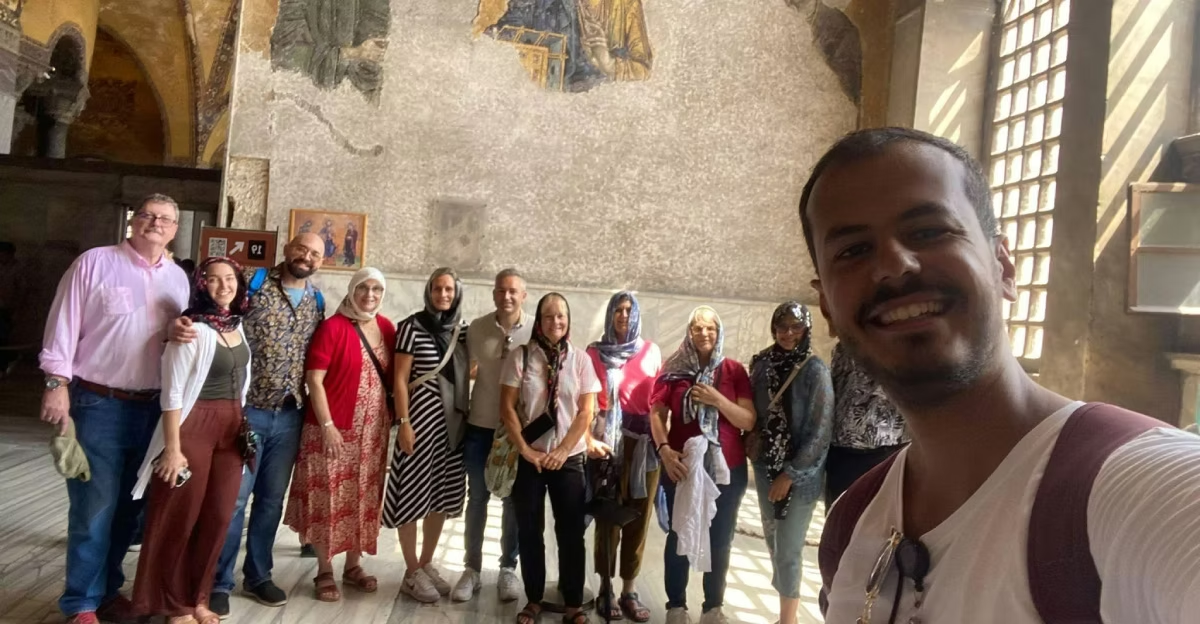
Hagia Sophia is an active mosque with a strictly enforced dress code. All visitors must cover their shoulders and knees. Women must also cover their hair with a headscarf. Shoes must be removed before stepping onto the carpeted prayer areas. Free headscarves are available at the entrance, but bringing your own is more comfortable. Visitors who do not comply will be asked to cover up or denied entry.
The most common avoidable problem at Hagia Sophia is arriving dressed incorrectly. Unlike some mosques where enforcement is informal, Hagia Sophia applies its rules consistently — shorts, sleeveless tops, and bare-headed women are turned back at the tourist entrance or asked to cover before entry is permitted.
Understanding the dress code before you arrive takes two minutes and prevents one of the most frustrating experiences at any major monument: queuing for 30 minutes and being turned back at the door.
The Dress Code: Full Requirements
Hagia Sophia’s dress code requires all visitors to cover their shoulders and knees. Women must additionally cover their hair with a headscarf. Shoes must be removed before stepping onto the carpeted sections of the upper gallery. These rules apply to all visitors regardless of nationality, age, or religion. Free headscarves are available at the entrance. The dress code is strictly enforced and non-compliance results in a request to cover up or denial of entry.
For Everyone (Men and Women)
Shoulders must be covered. No sleeveless tops, spaghetti straps, or off-shoulder clothing. Short-sleeved T-shirts that cover the shoulder completely are acceptable.
Knees must be covered. No shorts, short skirts, or short dresses. Trousers, long shorts that reach the knee, long skirts, and full-length dresses all comply. The knee must be fully covered.
Shoes must be removed before stepping onto the carpeted prayer area sections of the upper gallery. The carpet sections are clearly marked. Plastic shoe bags are provided at the entrance to carry your shoes through the visit.
For Women: Additional Requirement
Hair must be covered with a headscarf. This is non-negotiable. The headscarf should cover the hair completely and be tied or secured under the chin. Free headscarves are available at the entrance, but bringing your own is strongly recommended for comfort.
Summary Table
| Requirement | Men | Women |
|---|---|---|
| Shoulders covered | ✓ Required | ✓ Required |
| Knees covered | ✓ Required | ✓ Required |
| Hair covered | ✗ Not required | ✓ Required |
| Shoes removed (carpet areas) | ✓ Required | ✓ Required |
What to Wear: Practical Recommendations
Best choices for women: Light linen or cotton trousers with a short or long-sleeved top plus a headscarf in your bag. A long summer dress or maxi skirt with sleeves or a cardigan also works well. Lightweight, breathable fabrics are essential in Istanbul’s warm months.
Best choices for men: Trousers or knee-length long shorts with a short or long-sleeved shirt. Chino-style shorts that reach the knee are acceptable. Jeans work but can be very hot in summer.
What not to wear:
- Shorts ending above the knee
- Sleeveless tops, tank tops, or vest tops
- Off-shoulder or strapless clothing
- Short skirts or dresses
- Crop tops
Visiting in Summer: Staying Cool While Complying
Istanbul in summer (June–August) regularly hits 30–38°C. The dress code can feel demanding in the heat, but lightweight, breathable fabrics — linen, loose cotton — make it entirely manageable. Women do not need to wear a headscarf all day; carry one in your bag and put it on at the entrance.
The complimentary headscarves at the entrance are functional but can be uncomfortable in heat and difficult to keep in place. If you know you are visiting a mosque, bringing your own lightweight scarf is a far better experience.
The Headscarves at the Entrance
Free headscarves are available on a rack at or just before the tourist entrance. They are typically pre-laundered cotton or polyester wraps in neutral colours (beige, dark blue, white). They are one-size wraps that tie under the chin.
Many visitors find these difficult to keep in place throughout a 60–90 minute gallery visit. A lightweight personal scarf that doubles as a travel accessory is a practical solution — bring one from home or pick up an inexpensive one at the Grand Bazaar.
What Happens If You Arrive Dressed Incorrectly
If you arrive with bare shoulders, exposed knees, or uncovered hair (women), staff at or before the tourist entrance will approach you and ask you to comply. In most cases:
- A headscarf will be offered (free of charge)
- A disposable cover-up for bare shoulders may be offered
- Visitors in very short shorts that cannot be adequately covered may be denied entry
Visitors with pre-purchased online tickets are not exempt — the ticket guarantees your entry pass, but entry is conditional on dress code compliance.
Does the Dress Code Apply to Children?
Yes — the dress code applies to all visitors including children. Boys must have covered shoulders and knees; girls must have covered shoulders, knees, and hair. In practice, enforcement for very young children may be slightly more flexible, but dressing children appropriately avoids any complications at the entrance. See our visiting with kids guide for more family-specific advice.
Does the Dress Code Apply to the History Museum?
The Hagia Sophia History and Experience Museum is a secular cultural venue and does not enforce the mosque dress code. However, since most visitors combine the museum and mosque in the same trip, dressing for the mosque from the start is the most practical approach.
The Same Code Applies at the Blue Mosque
If you are visiting the Blue Mosque on the same day — as most Sultanahmet visitors do — the identical dress code applies there too. Dressing appropriately for your entire morning means no delays at either entrance. For a comparison of both, see our Hagia Sophia vs Blue Mosque guide.
Frequently Asked Questions
Do men need to cover their heads at Hagia Sophia?
No — head covering is required only for women. Men must cover their shoulders and knees but not their hair.
Can I wear a hat instead of a headscarf?
No. A hat does not fulfil the headscarf requirement. The hair must be covered with a cloth wrap that covers the top and sides of the head.
What if I forget to bring a headscarf?
Free headscarves are available at the entrance. They are clean and functional, though less comfortable than a personal scarf.
Do I need to remove my shoes everywhere in the building?
Only on the carpeted sections. The rest of the upper gallery has non-carpeted flooring where shoes remain on. A shoe bag is provided at the entrance.
Is the dress code enforced strictly?
Yes — more strictly than at many other mosques. Compliance is checked at or before the entrance, consistently.
Can I wear a long dress without a headscarf if it covers shoulders and knees?
No — women must cover their hair regardless of what else they are wearing. A compliant dress still requires a headscarf.
