
Hagia Sophia Photography Guide: Rules, Best Spots & Tips (2026)
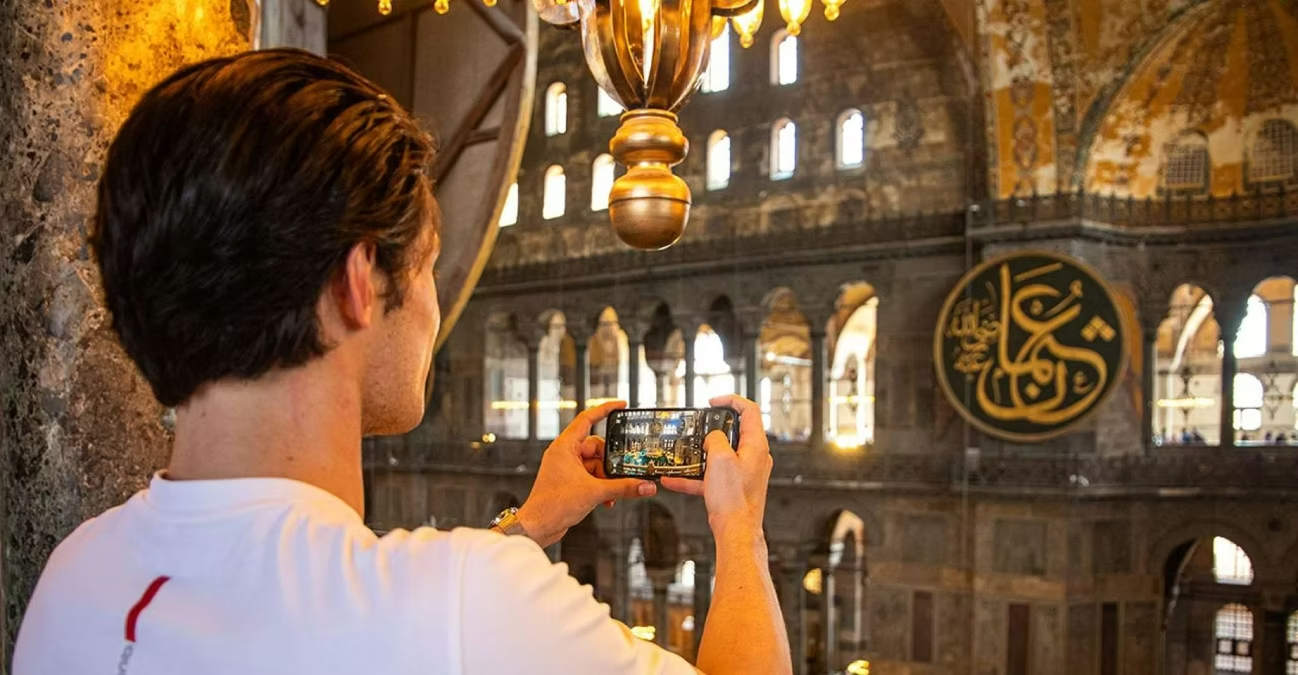
Photography is permitted throughout the Hagia Sophia Visiting Area (upper gallery). Flash photography is not allowed. Visitors must not photograph people who are praying. The best photography conditions are in the first hour after opening (9:00–10:00am) when the gallery is quieter and the morning light falls directly on the mosaics. The Deesis Mosaic, the dome interior, and the Ottoman calligraphic medallions are the most photographed subjects in the building.
Hagia Sophia is one of the most photographed interiors in the world, and with good reason — the combination of Byzantine gold mosaics, Ottoman calligraphy, natural light through ancient windows, and the sheer scale of the 31-metre dome creates a visual environment of extraordinary richness. This guide covers the rules, the best spots, and the practical techniques that produce the most rewarding results.
Whether you’re shooting with a flagship smartphone or a dedicated mirrorless camera, understanding the light, the layout, and the rules will make the difference between snapshots and genuinely memorable images.
Photography Rules at Hagia Sophia
Photography is freely permitted throughout the Hagia Sophia Visiting Area (upper gallery) for personal use. Flash photography is prohibited — it can damage the ancient mosaics and disturbs other visitors. Visitors must not photograph individuals who are praying in the mosque below. Video photography is also permitted. Tripods and professional equipment may require prior permission — confirm with the Hagia Sophia administration if you intend to use professional camera setups.
What is allowed:
- Photography throughout the Visiting Area for personal use
- Video recording
- Smartphone photography (the majority of visitor photography)
- Mirrorless and DSLR cameras with lenses
What is not allowed:
- Flash photography of any kind — this rule is enforced
- Photographing people who are visibly praying
- Commercial photography without prior permission from the Hagia Sophia administration
- Tripods and professional lighting rigs without advance permission
Practical note on enforcement: Flash use is monitored and staff will ask you to disable flash if they observe it in use. Most modern smartphones and cameras will trigger flash automatically in low-light conditions — check and disable your flash setting before entering the gallery.
Best Photography Spots in the Visiting Area
1. The Deesis Mosaic (South Gallery)
The most photographed single feature in Hagia Sophia. The challenge with the Deesis is the low and indirect light in the south gallery — it requires a capable low-light sensor or a steady hand for a long exposure. The gold tesserae reflect the ambient light beautifully, but a flash would wash out this effect entirely.
Best approach: Use your camera’s night mode or manual low-light settings. Brace your camera against the balustrade for stability. Shoot from close range to capture the detail of individual tesserae and the remarkable expressiveness of the faces.
Best time: 9:00–9:45am, when the gallery is empty enough to position yourself directly in front of the mosaic without other visitors in the frame.
2. The Empress Zoe Mosaic Panel
Adjacent to the Deesis in the south gallery. The altered face — chiselled and replaced — is most visible in good ambient light. Position yourself slightly to the left for the best angle on the composition.
3. The Central Dome — Looking Up
One of the most dramatic shots in the building. The dome interior, with its ring of windows and the surviving Byzantine mosaic of the Pantocrator partially visible, is best captured from the central walkway of the upper gallery.
Best approach: Use a wide-angle lens or the widest setting on a zoom. The dome is too large to capture fully from the gallery level — a wide-angle framing that includes the calligraphic medallions in the foreground creates a sense of scale.
4. The View Down into the Prayer Hall
From the gallery railing, the view down into the main prayer hall — with its Ottoman carpets, the enormous chandelier, and the forest of columns — is one of the most spatially dramatic shots in the building.
Best approach: Shoot between the gallery railings or through the arched openings. Include the railing in the foreground for depth. The prayer hall below is lit independently from the gallery — exposing for the midground gives the best overall balance.
5. The Ottoman Calligraphic Medallions
The eight enormous circular medallions hanging below the dome — inscribed with the names of Allah, Muhammad, and the caliphs in bold Arabic script — are visually striking and photographically underexplored by most visitors who focus on the mosaics.
Best approach: From the walkway sections that run along the longer axis of the building, frame one or two medallions against the dome and window light behind them. A telephoto setting or zoom allows you to fill the frame with a single medallion and its calligraphic detail.
6. The Virgin and Child Apse Mosaic
Visible from the gallery level looking towards the main apse. The mosaic sits high above the prayer hall in the semi-dome above the imperial door — a telephoto lens or strong zoom is needed to capture detail from the gallery.
7. The Windows and Light
The ring of windows at the base of the dome and the Byzantine windows in the gallery walls create beautiful patterns of light and shadow across the interior surfaces throughout the day. These are particularly striking in the early morning when the sun is low and the light enters the eastern windows at a shallow angle.
Exterior Photography Spots
The exterior of Hagia Sophia is freely photographable from all the public areas around the building. Key exterior spots:
Sultanahmet Square: The view from the Blue Mosque side of the square gives the classic frontage perspective — the full sweep of the exterior with the minarets. Best in morning light when the sun illuminates the eastern-facing main façade.
The approach from Topkapi Palace: Walking from the Topkapi Palace gate towards the tourist entrance gives a close perspective on the northeast façade and the minarets that is less frequently photographed than the Sultanahmet Square view.
The garden behind the building: A small garden area on the south side of the mosque offers views of the exterior buttresses and the semi-dome system from close range — good for architectural detail shots.
Best Time for Photography
Early morning (9:00–10:00am) — Best
The combination of a quiet gallery, warm directional light through the eastern windows, and the ability to position yourself without crowds makes this the best photography window by a significant margin.
The morning light enters the gallery through the eastern-facing windows at a low angle, creating warm golden tones on the mosaic surfaces. The Deesis Mosaic in particular is at its most photogenic in this light — the gold tesserae shimmer in a way that midday or afternoon diffuse light does not replicate.
Late afternoon (5:00–7:00pm) — Second best
The gallery is significantly less crowded than at any other time since opening. The late afternoon light takes on a warm, oblique quality through the western windows. A different but equally beautiful photographic environment from the morning.
Midday — Least ideal
More diffuse light, the most crowded gallery conditions, and the greatest competition for unobstructed angles at the mosaic stops. Not the time to prioritise photography.
Camera and Settings Recommendations
Smartphone photography: Modern flagship smartphones (iPhone 15 Pro and above, Samsung Galaxy S24 and above) produce very capable results in the low-light conditions of the south gallery. Use night mode for the Deesis Mosaic, portrait mode for architectural details, and standard mode for the dome and medallion shots in better-lit areas.
Mirrorless and DSLR cameras: For photographers using larger camera systems, the key settings for Hagia Sophia are:
- ISO: 1600–6400 in the south gallery (low light) depending on your sensor capability; 400–800 in the main walkway areas
- Aperture: f/2.8–f/4 for individual mosaic details; f/8–f/11 for architectural shots requiring depth of field
- Shutter speed: 1/60 or faster handheld; use image stabilisation; brace against surfaces for the slowest speeds
- White balance: Auto or tungsten/warm preset (the interior lighting in the gallery is warm and mixed)
Lens recommendations: A 24–70mm zoom covers most situations. A wide-angle (16–24mm) is ideal for the dome and prayer hall views. A 70–200mm is useful for the Virgin and Child mosaic and the calligraphic medallion detail from distance.
No flash — always. Disable it before you enter. Automatic flash in low light is the single most common photography mistake inside Hagia Sophia, and it both damages the mosaics over time and produces flat, washed-out images.
Practical Photography Tips
Arrive at opening. Photographically, the first 45–60 minutes of the day are significantly better than any other window. Empty frames, better light, and the ability to take time at each spot.
Be patient at the Deesis Mosaic. Even at opening, the Deesis draws visitors. Wait for moments when the crowd clears — it happens briefly even during busy periods. A 30-second wait for a clear shot is almost always available if you are patient.
Use portrait orientation for the dome views. The dome is taller than it is wide from the gallery level. Portrait/vertical framing captures it more effectively than landscape.
Check your camera’s white balance output. The mixed light sources in the gallery (natural daylight through windows, warm artificial lighting from chandelier systems) can produce inconsistent colour casts. Reviewing a test shot and adjusting white balance before shooting extensively saves time in editing.
Respect other visitors. Standing in front of the Deesis Mosaic for extended periods during busy periods prevents others from seeing it. Be mindful of your time at the most popular spots.
Frequently Asked Questions
Can I use a tripod inside Hagia Sophia?
Tripods are generally not permitted without prior authorisation from the Hagia Sophia administration. A monopod may be tolerated at quieter times but is not officially sanctioned. For handheld low-light photography, image stabilisation and bracing against surfaces are the practical alternatives.
Is flash photography really enforced?
Yes — consistently. Flash is visually obvious and staff patrol the gallery. Even if your flash fires accidentally, you will typically be asked to disable it. Disable it deliberately before entering.
Can I photograph the prayer hall below?
Yes — from the gallery level, you can photograph the prayer hall below through the railings and arched openings. You should not photograph individual worshippers who are actively praying.
Are drone flights permitted?
No — drone flights are strictly prohibited at and around Hagia Sophia.
Can I share my photos commercially?
Personal photography for social media and personal use is unrestricted. Commercial use of photographs taken inside Hagia Sophia may require written permission from the mosque administration. If you intend to use photographs for commercial purposes, contact the administration before your visit.
