
Hagia Sophia Crowds: When Is It Least Busy? (2026)
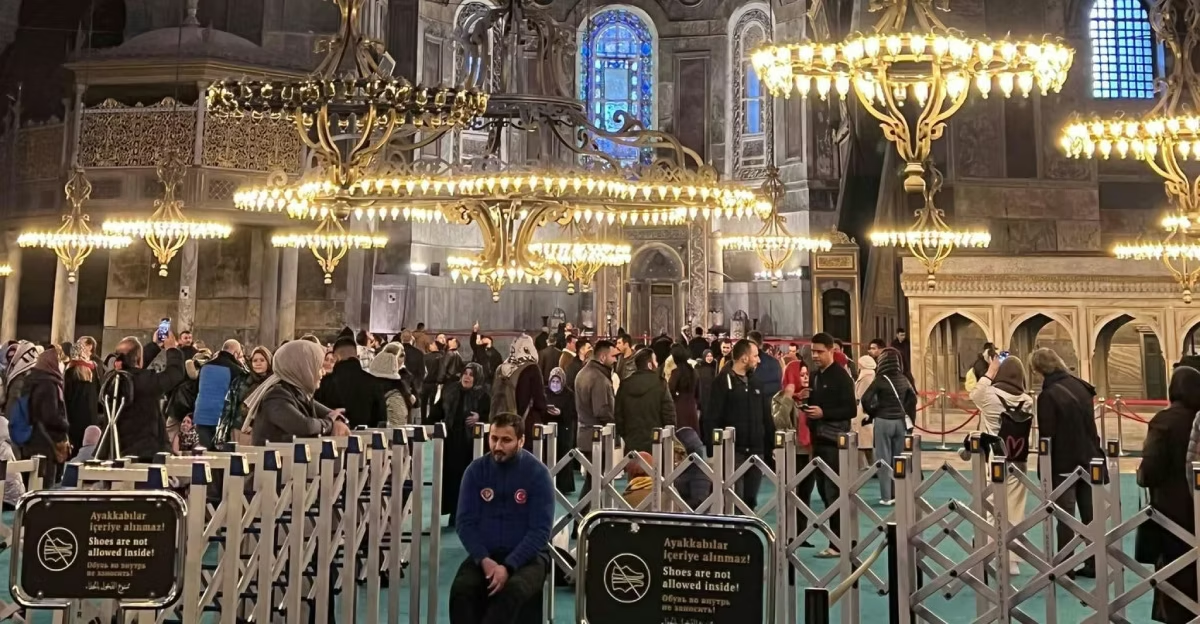
Hagia Sophia is least busy on weekday mornings between 9:00 and 10:30am, particularly on Tuesdays, Wednesdays, and Thursdays in November through March. During peak season (April–June and September–October), crowds are heaviest from 10:30am to 2:30pm on weekends. The single most effective strategy for avoiding crowds at any time of year is arriving at opening (9:00am) with a pre-booked skip-the-line ticket.
Hagia Sophia is consistently one of Istanbul’s most visited landmarks — and visitor numbers have increased substantially since the €25 entry fee was introduced in January 2024, partly because the fee and ticketing system have made crowd management more structured. Understanding crowd patterns at Hagia Sophia is not about finding a magic moment when the building is empty — that moment does not exist during tourist season. It is about identifying the least-bad windows and planning around them.
This guide gives you a realistic crowd picture at every level of granularity — by hour, day, season, and visitor type — so you can make an informed decision about when to visit.
Crowd Levels by Time of Day
Hagia Sophia is least crowded in the first 90 minutes after opening (9:00–10:30am) and in the final 90 minutes before closing (5:30–7:00pm). The peak crowd period is 10:30am–2:30pm, when tour groups arrive in force, security queues are longest, and the upper gallery — particularly around the Deesis Mosaic — is at its most congested. This daily pattern holds year-round, though the absolute crowd level varies significantly by season.
9:00–10:30am — Least Crowded
The best window of the day, consistently. At opening, the security queue runs 5–15 minutes. The upper gallery is quiet enough to spend extended time at each mosaic without competing for position. The morning light through the Byzantine windows is at its best. This is when the Deesis Mosaic looks as it was meant to be seen — without a crowd of visitors in front of it.
10:30am–2:30pm — Most Crowded
The worst period. Organised tour groups typically arrive between 10:30am and 1:00pm, and the security queue can stretch to 30–45 minutes during peak season weekends. Inside the gallery, the south gallery (where the Deesis Mosaic is located) becomes very congested, and the noise level rises significantly. Photography around the key mosaics is difficult.
2:30–4:30pm — Moderate
Crowds begin to thin as tour groups complete their visits and move to their next destination. Still busy on weekends and during peak season, but noticeably better than midday.
4:30–7:00pm — Second-Best Window
The quieter afternoon period. Security queues typically drop to 10–15 minutes. The gallery is less crowded than at any point since opening, and the late afternoon/early evening light creates a different but equally beautiful atmosphere — warmer and more directional than the morning light. Last entry is at 7:00pm.
Friday-specific pattern: On Fridays, the Visiting Area closes 12:30–14:30 for midday prayer, creating a compressed visiting pattern. Friday mornings (9:00–11:30am) are often quieter than comparable weekday mornings, as the closure deters some visitors from planning Friday visits entirely. Friday afternoons (14:30–7:00pm) see a moderate crowd as visitors who could not make the morning session arrive after the closure.
Crowd Levels by Day of Week
Hagia Sophia is least crowded on Tuesdays, Wednesdays, and Thursdays. Weekends (Saturday and Sunday) consistently see the highest visitor numbers. Monday is moderately busy. Fridays have the added complication of the 12:30–14:30 tourist closure, which makes Friday planning more complex regardless of overall crowd levels.
| Day | Relative Crowd Level | Notes |
|---|---|---|
| Tuesday | ✅ Lowest | Best overall choice year-round |
| Wednesday | ✅ Low | Consistently quiet |
| Thursday | ✅ Low | Good alternative to Tue/Wed |
| Monday | ⚡ Moderate | Busier than mid-week |
| Friday | ⚠️ Variable | Morning often quiet; closure 12:30–14:30 |
| Saturday | ❌ Busy | Highest crowds |
| Sunday | ❌ Busy | Similar to Saturday |
The mid-week advantage is most pronounced during peak season — on a Tuesday in May, the gallery at 9:30am may have a fifth of the visitors you would encounter at the same time on a Saturday. In low season (November–February), the day-of-week differential is smaller because overall numbers are lower.
Crowd Levels by Season
The quietest seasons to visit Hagia Sophia are late autumn (November) and winter (December–February, excluding Christmas week). The busiest seasons are spring (April–May) and autumn (September–October). Summer (July–August) is high in visitor numbers but the extreme afternoon heat deters some visitors from arriving after midday, creating a different crowd dynamic from spring and autumn.
November — Quietest Month
November sees the sharpest crowd drop of the year — the October tourist peak ends quickly, temperatures cool, and visitor numbers fall to their annual low. Weekday mornings in November at Hagia Sophia can feel almost contemplative by high-season standards. If you have flexibility on travel timing, November is the best overall month to visit Istanbul.
December–February (excluding Christmas week) — Very Quiet
January and February are the least crowded months of the year. Security queues are consistently short, the gallery is rarely congested, and the building takes on a different quality in winter light. The trade-off is shorter days and cooler temperatures (5–12°C). The week between Christmas and New Year is an exception — international visitor numbers spike significantly during this period.
March — Transition Month
March sees visitor numbers beginning to climb as spring approaches. Early March is relatively quiet; late March can already feel busy on weekends. A good month for visitors who want spring weather without full peak-season crowds.
April–May — First Peak
Istanbul’s first and busiest tourist peak. Hagia Sophia is genuinely crowded during this period, particularly on weekends and at midday. Morning visits with pre-booked tickets are essential. Book guided tours 5–7 days in advance.
June — High Season Begins
Busy but not at its absolute worst. Temperatures are warm (22–28°C), the city is lively, and crowds are high but slightly below the April–May and September–October peaks.
July–August — Hot and Busy
The highest overall visitor numbers of the year, with a significant portion arriving via cruise ships. The intense afternoon heat (regularly 33–38°C) does push some visitors away from midday arrival, slightly moderating the afternoon crowd compared to spring. Early morning visits (9:00–10:30am) are essential in summer.
September–October — Second Peak
The second major tourist peak, with weather conditions (18–26°C) that many visitors prefer to summer. These months see high crowd levels similar to April–May. October in particular tends to have better weather and significant visitor numbers. Pre-booking is essential.
The Impact of the Entry Fee on Crowds
Since the €25 tourist entry fee was introduced in January 2024, the ticketing system has created a more managed crowd environment than the previous free-entry system. The structured ticket collection process means visitor flow is partially regulated — the queue at the kiosk, rather than the ticket booth, becomes the control point.
In practical terms: the fee has not dramatically reduced visitor numbers (Hagia Sophia’s appeal is too strong), but the online booking system has shifted when crowds arrive. Visitors with online tickets — which now represent the majority of tourist entry — tend to arrive concentrated around popular time slots (9:00am in particular), creating a more defined early morning rush.
Crowd Management Strategies
Strategy 1: Arrive at 9:00am with a pre-booked ticket. This is the most effective single strategy regardless of season. Combine an online ticket (to bypass the booth queue) with an early arrival (to minimise the security queue and gallery crowds).
Buy This TicketStrategy 2: Visit mid-week. Tuesday, Wednesday, or Thursday visits are consistently 20–40% less crowded than weekend visits during peak season. If your schedule allows any flexibility, mid-week is worth prioritising.
Strategy 3: Visit in November or winter. If Istanbul timing is flexible within your overall travel plans, visiting in November gives you Hagia Sophia at its quietest while still experiencing the city in reasonable conditions.
Strategy 4: Use the late afternoon window. If you cannot do the 9:00am visit, aim for 4:30–5:30pm entry. The security queue is typically shorter and the gallery less crowded than at any other point in the afternoon.
Strategy 5: Visit on a Friday morning. Counter-intuitively, Friday mornings (9:00–11:30am) at Hagia Sophia are often among the quietest weekday windows, because the afternoon closure discourages many visitors from planning Friday visits at all. Arrive early and be done well before 12:00pm.
Frequently Asked Questions
How crowded is Hagia Sophia?
Very crowded during peak season (April–June and September–October), particularly on weekends and at midday. Quiet to moderately busy in winter (November–February). The first hour after opening (9:00–10:00am) is consistently the least crowded window of the day year-round.
How long is the queue at Hagia Sophia?
There are two queues: the ticket booth queue (bypassed entirely with an online ticket, which can run 45–90 minutes in peak season) and the security queue (mandatory for all, typically 5–15 minutes at opening, 25–40 minutes at peak midday in high season).
Is Hagia Sophia too crowded to enjoy?
No — but timing matters significantly. At 9:00am on a weekday with a pre-booked ticket, the experience is genuinely unhurried. At noon on a Saturday in October with a booth-purchased ticket, it can feel very crowded. The same building, very different experience.
Does the crowd level inside affect the experience significantly?
Yes — particularly around the Deesis Mosaic, where crowds make extended contemplation difficult and photography nearly impossible during peak periods. The dome views and the broader gallery circuit are less affected by crowds than the specific mosaic stops.
