
Hagia Sophia Accessibility Guide (2026)
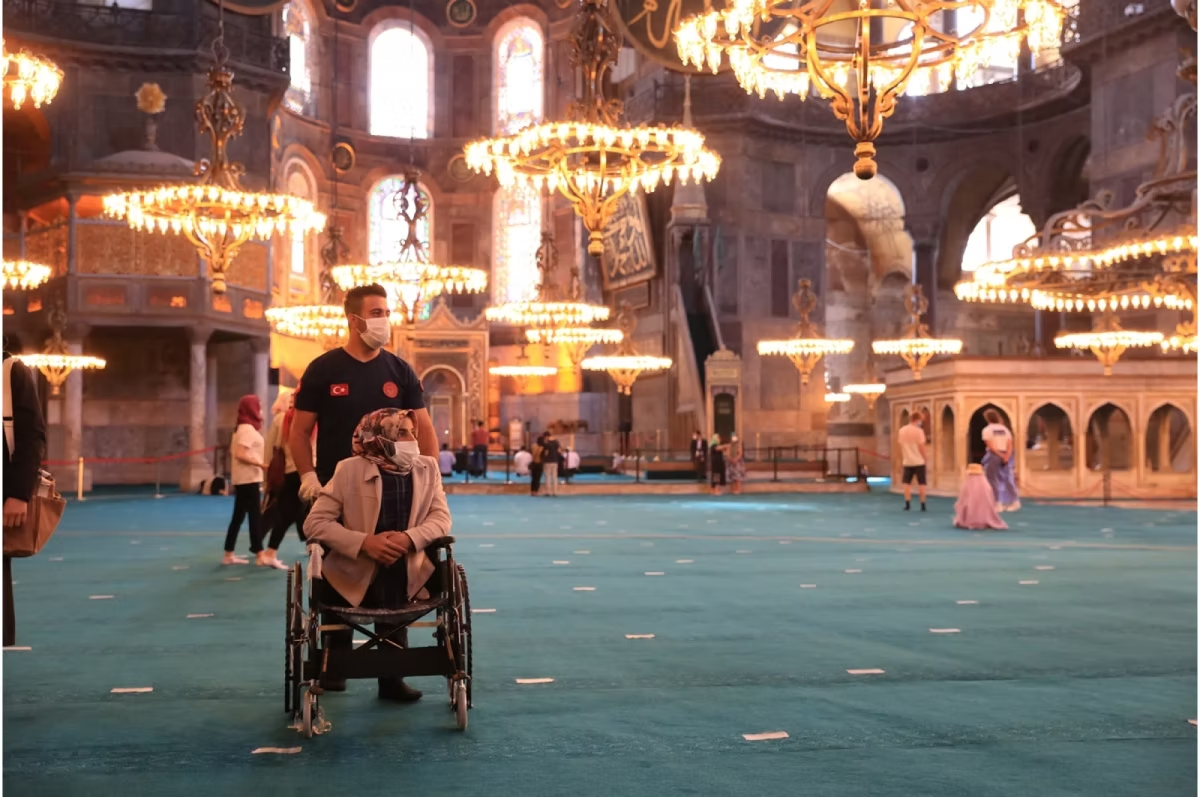
Hagia Sophia has improved its accessibility significantly since the introduction of the dedicated tourist entrance near Topkapi Palace in 2024. The tourist entrance is reached via a gentle ramp, providing step-free access to the upper gallery for most of its length. However, the building is a 1,500-year-old monument with some uneven surfaces, narrow sections, and areas that are not fully navigable in a standard wheelchair. Visitors with significant mobility limitations should plan carefully and may wish to contact the Hagia Sophia administration in advance.
Hagia Sophia is an ancient monument — not a purpose-built modern visitor facility. Its accessibility is meaningfully better than it was before 2024, when the new tourist entrance and ramp-based access route were introduced, but it falls short of the full accessibility that modern museum standards would require. This guide gives you an honest picture of what is and is not accessible, so you can plan your visit with accurate expectations.
The information below covers wheelchair and mobility-aid access, sensory accessibility, the security screening process, shoe removal requirements, and practical tips for making the most of your visit regardless of your mobility level.
The Tourist Entrance: Ramp Access
The dedicated tourist entrance to Hagia Sophia, introduced in 2024, is located on the northeast side of the building near Topkapi Palace and provides access to the upper gallery via a gentle ramp. This ramp is the primary accessibility improvement at the site — it allows visitors using wheelchairs, walkers, and mobility aids to reach the upper gallery without steps. The ramp is wide enough for standard wheelchairs and has a gradual incline.
The tourist entrance replaced the previous arrangement where tourists entered through the main gate, which involved stairs and uneven surfaces. The new entrance was specifically designed to provide more structured tourist access, and the ramp is a genuine accessibility improvement.
The ramp:
- Gentle gradient — navigable by most manual wheelchair users independently or with minimal assistance
- Wide enough for standard wheelchairs
- Surfaces are smooth at the entrance point
- Leads directly into the lower section of the upper gallery circuit
What to be aware of: The ramp provides access to the gallery, but the gallery itself — the ancient upper level of the building — has its own surfaces, narrower sections, and areas where the flooring is uneven. The ramp solves the entrance problem; navigating the gallery itself requires further assessment.
Inside the Upper Gallery: What Is Accessible
The Visiting Area (upper gallery) is a circuit around the perimeter of the main nave. It is at a single level — no internal stairs between the main gallery sections.
Generally accessible:
- The main walkway along the north and south galleries — wide enough for wheelchair passage
- The dome and prayer hall views from the central walkway
- The general sweep of the gallery circuit
Potentially challenging:
- Some sections of the gallery have uneven marble flooring — ancient surfaces with worn or slightly raised tiles
- The south gallery (where the Deesis Mosaic and Empress Zoe panel are located) involves a narrower section with a lower barrier
- The balustrade railings are not always at a height that allows comfortable viewing from a seated position — a companion who can describe or photograph the mosaics at closer range may be helpful
- The carpet sections require shoe removal — this can be managed with assistance
Not accessible:
- The main prayer hall on the ground floor is not accessible to tourists regardless of mobility status — it is reserved for worshippers
- Certain historic sections of the building beyond the standard tourist circuit are not on the accessible route
Wheelchair Availability
Hagia Sophia does not provide on-site wheelchair loans for tourists as a standard service. Visitors who require a wheelchair should bring their own or arrange rental through Istanbul’s broader visitor services.
Practical note: Compact travel wheelchairs or lightweight manual chairs navigate the ramp and gallery more easily than large power wheelchairs. If travelling with a mobility aid, a lightweight manual chair is the most practical option for this site.
Sensory Accessibility
Visual impairment: The audio guide provides rich narration of the mosaics, architectural features, and history — an excellent resource for visitors with visual impairments. A private guide who can describe features in detail and position the visitor at the best vantage points for tactile reference is a good additional option. See our private guided tour review for details.
Hearing impairment: The visual experience of Hagia Sophia — the mosaics, the dome, the spatial drama — is fully available to visitors with hearing impairments. Written guides and visual materials are available, and the audio guide transcript may be available on request from the operator.
Cognitive accessibility: The layout of the Visiting Area is a relatively simple circuit. The audio guide provides structured narration that can help visitors navigate the gallery systematically. A private guide can adapt their communication style for visitors with cognitive accessibility needs.
The History and Experience Museum: Accessibility
The Hagia Sophia History and Experience Museum — the ticket collection point for online bookings — is a purpose-built modern venue on a single ground-floor level. It is fully accessible:
- Step-free entrance
- Wide doorways
- Smooth flooring throughout
- Accessible toilets
Visitors with significant mobility limitations who find the gallery circuit challenging may find the museum a more comfortable way to engage with Hagia Sophia’s history.
Security Screening and Accessibility
All visitors pass through airport-style security screening at the tourist entrance. The security setup includes:
- An accessible lane for visitors with wheelchairs and mobility aids — staff at the entrance can direct you to this
- X-ray for bags (bags can be placed on the belt by a companion)
- Walk-through metal detector or manual screening for visitors who cannot pass through the detector
If you have an implanted medical device (pacemaker, neurostimulator, cochlear implant) that may be affected by metal detection equipment, inform security staff before screening. Manual pat-down screening is available.
Shoe Removal on Carpet Sections
All visitors must remove shoes before stepping onto the carpeted prayer areas in the gallery. For visitors with limited hand function or who cannot manage shoe removal independently, a companion can assist. Slip-on shoes without laces are the most practical footwear for managing this requirement.
Practical Accessibility Tips
Contact the administration in advance. If you have specific accessibility requirements, it is worth contacting the Hagia Sophia administration before your visit to confirm current accessibility provisions and whether any specific accommodations can be arranged. Contact information is available on the official Turkish Ministry of Culture website.
Consider a private guided tour. A private guide can pace the visit entirely around your mobility needs, ensure you are positioned at the best accessible vantage points for each feature, and manage the logistics of entry and shoe removal. See our private guided tour review for details.
Book This TourArrive early. The security queue is significantly shorter at 9:00am than at any other time of day. For visitors who find standing in queues physically demanding, early arrival reduces this burden substantially. See our best time to visit guide.
Book online. Bypassing the ticket booth queue with an online ticket reduces the amount of standing and waiting required before entering the gallery. This is especially important for visitors with limited stamina or mobility.
Wear comfortable, easily removed footwear. Slip-on shoes, sandals with velcro, or shoes with elastic laces are the most practical footwear for the shoe removal requirement on carpet sections.
Bring water. The security queue and gallery circuit involve meaningful time on your feet or in transit. Hydration is particularly important for visitors with conditions that are affected by heat or exertion, especially in Istanbul’s warm months.
Getting to Hagia Sophia with Mobility Limitations
The T1 tram is generally the most accessible public transport route to Hagia Sophia. The Sultanahmet tram stop is close to the tourist entrance, and the tram itself has accessible boarding platforms at most stops.
For visitors who cannot manage public transport, taxis and ride-share apps (Uber, BiTaksi) provide door-to-door service to the tourist entrance. The tourist entrance area has a small drop-off zone on the approach road.
For full transport details, see our how to get to Hagia Sophia guide.
Nearby Accessible Landmarks
If the Hagia Sophia gallery circuit is physically demanding, the following nearby landmarks offer different accessibility profiles:
Hagia Sophia History and Experience Museum: Fully accessible, ground floor, smooth surfaces — an excellent complement or alternative to the mosque gallery.
Basilica Cistern: Partially accessible — the main cistern hall is reached by steps and has uneven surfaces. Limited accessibility for wheelchair users. Confirm current provisions before visiting.
Blue Mosque: Generally accessible for the main prayer hall area — the entrance courtyard is flat and the interior is primarily carpeted at ground level. However, removing shoes and navigating crowds is required.
Sultanahmet Square: Fully accessible public space — flat, paved, and navigable in all mobility aids. The Hippodrome monuments (Egyptian Obelisk, Serpent Column, Column of Constantine) are freely visible from the square.
For more on nearby attractions, see our attractions near Hagia Sophia guide.
Frequently Asked Questions
Is Hagia Sophia wheelchair accessible?
Partially. The tourist entrance has a ramp providing step-free access to the upper gallery. The gallery itself has some uneven surfaces and narrow sections but is largely navigable for standard wheelchair users with some assistance. Full accessibility comparable to a modern museum is not available in a 1,500-year-old building.
Are there lifts inside Hagia Sophia?
No lifts are available within the Visiting Area. The ramp at the tourist entrance provides the accessible route into the gallery. Once inside, the gallery is on a single level.
Can visitors with limited mobility see the main features?
Yes — the Deesis Mosaic, the dome views, the Ottoman calligraphic medallions, and the prayer hall views are all visible from the main gallery walkway, which is generally accessible. The narrower south gallery section (where the Deesis is located) may require a companion’s assistance in a wheelchair.
Are accessible toilets available?
Accessible toilet facilities are available at the History and Experience Museum. Within the mosque Visiting Area itself, facilities are more limited — confirm current provisions at the entrance.
Is there priority queue access for visitors with disabilities?
An accessible security lane is available at the tourist entrance. Staff can direct you to this. For ticket queue bypass, online booking provides the most effective solution for all visitors regardless of mobility status.
What is the best ticket option for visitors with accessibility needs?
A private guided tour is the best option — the guide manages all logistics, sets the pace around your needs, and ensures you see the key features from the most accessible vantage points. For self-guided visits, the online skip-the-line ticket is essential to avoid standing in booth queues.
