
Hagia Sophia + Blue Mosque + Grand Bazaar Tour: Full Review
The Hagia Sophia, Blue Mosque and Grand Bazaar tour is an excellent choice for visitors who want to combine religious and architectural history with the sensory experience of one of the world’s oldest and largest covered markets in a single guided day. The three stops represent distinctly different aspects of Ottoman Istanbul — its spiritual architecture, its imperial mosques, and its commercial heart — and together make for a varied, well-paced visit. Allow approximately 4 hours.
Most Sultanahmet itineraries focus entirely on religious monuments. This tour breaks that pattern by adding the Grand Bazaar — the vast covered market established by Mehmet II in 1455, two years after the Ottoman conquest of Constantinople — as a third destination. The result is a tour that covers Ottoman Istanbul across three of its most defining functions: worship, imperial architecture, and commerce.
This review covers what each stop includes, how the day flows, and whether the Grand Bazaar addition makes the tour meaningfully better than a straightforward Hagia Sophia + Blue Mosque visit.
Top Tickets
What Is Included?
The Hagia Sophia, Blue Mosque and Grand Bazaar tour includes skip-the-line entry to Hagia Sophia’s Visiting Area with expert-guided commentary, guided access to the Blue Mosque, and a guided introduction to the Grand Bazaar covering its history, layout, and the most significant sections of the 4,000-shop covered market. A licensed guide leads the group throughout. The tour runs approximately 4 hours and is available daily.
What the tour covers:
- Skip-the-line Hagia Sophia entry — entry pass collected efficiently; no booth queue
- Licensed guide throughout all three stops
- Hagia Sophia Visiting Area — approximately 60–75 minutes of guided commentary on the Byzantine mosaics, Ottoman additions, and architectural history
- The Blue Mosque — approximately 40–50 minutes covering the Iznik tile interior, the six minarets, and the architectural relationship with Hagia Sophia
- The Grand Bazaar — approximately 45–60 minutes with guided introduction to the bazaar’s history, layout, and major sections
- Small group format — typically 8–15 participants
Not included: Transport to/from Sultanahmet, purchases at the Grand Bazaar, meals, guide gratuity.
The Grand Bazaar: What to Expect
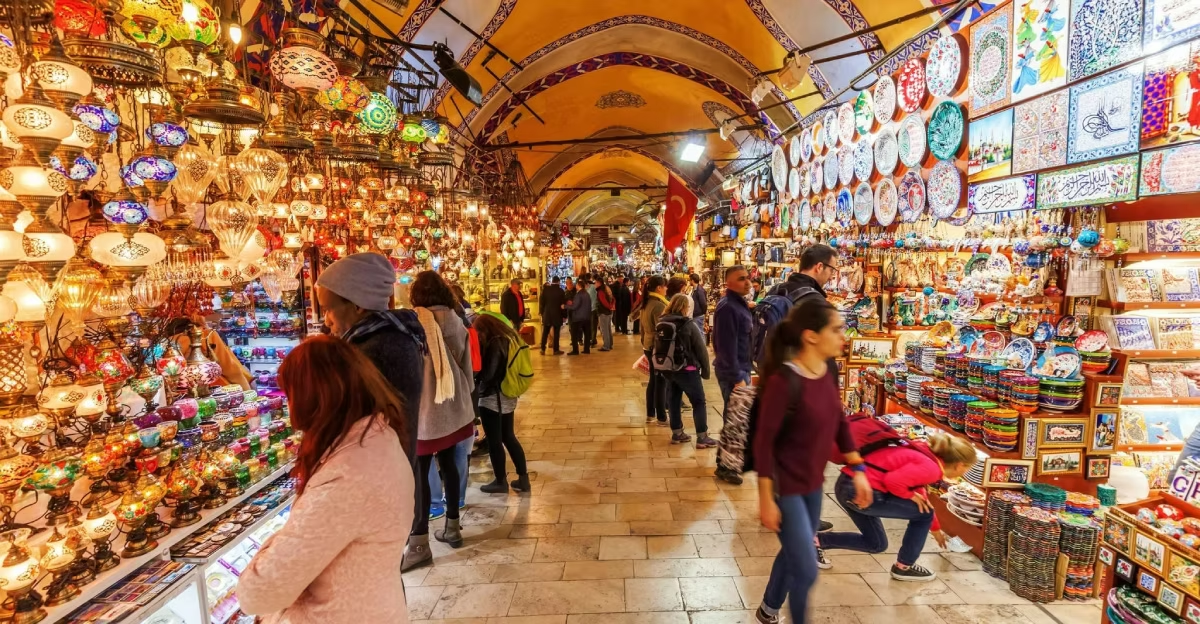
The Grand Bazaar (Kapalıçarşı) in Istanbul is one of the world’s oldest and largest covered markets, established by Sultan Mehmet II in 1455 and expanded by successive Ottoman sultans. It covers 30,700 square metres, contains over 4,000 shops across 61 covered streets, and attracts approximately 250,000–400,000 visitors per day. Key sections include the Old Bazaar (İç Bedestan), the jewellery quarter, the carpet and kilim section, the leather and textile areas, and the hans (caravanserais) surrounding the main complex.
The Grand Bazaar is an overwhelming place to navigate without a guide. Its 61 covered streets and 4,000 shops contain everything from genuine antiques and hand-woven carpets to mass-produced tourist souvenirs, and knowing which sections are worth your time — and which traders are trustworthy — is not obvious to first-time visitors.
A guide introduces the bazaar’s history and layout efficiently, orients you within the main sections, and typically leads the group to the most authentic and visually interesting areas before allowing free time to explore independently.
Key sections the guide typically covers:
The Old Bazaar (İç Bedestan): The original Byzantine market building at the heart of the Grand Bazaar, dating from the late 15th century. This is where the most valuable and authentic items are typically traded — antiques, jewellery, and rare textiles. The guide usually covers the architectural history of the building itself.
The jewellery quarter: One of the most visually striking sections, with goldsmiths and silversmiths displaying their work in dozens of adjacent shops. The guide typically explains what to look for and how to evaluate quality.
The carpet and kilim section: Handwoven Turkish carpets and kilims are among the Grand Bazaar’s most significant product categories. A guide can explain the difference between machine-made and hand-woven pieces, and identify the regional styles on display.
The hans: The caravanserais surrounding the main bazaar — originally the warehouses and overnight accommodation for travelling merchants — are among the most architecturally interesting parts of the complex and are often overlooked by independent visitors.
Free time: Most guided Grand Bazaar visits include 15–20 minutes of free time for browsing, photography, or purchases.
Book This TourHow the Three Stops Work Together
The tour’s narrative thread is Ottoman Istanbul across its most important functions. A guide who draws these connections explicitly makes the three stops feel like parts of a coherent story rather than three unrelated experiences:
Hagia Sophia represents the religious and architectural inheritance the Ottomans claimed when they conquered Constantinople in 1453 — converting the greatest cathedral of the Byzantine world into the imperial mosque of a new empire.
The Blue Mosque, built 163 years later, represents the Ottomans’ own confident architectural response — building a mosque of comparable scale and prestige alongside the converted cathedral, demonstrating that the empire had fully absorbed and surpassed its Byzantine predecessor.
The Grand Bazaar, established just two years after the conquest, represents the Ottomans’ immediate pragmatic priority — commerce. The bazaar was not a monument but a revenue-generating engine, and its establishment in 1455 shows how quickly the new empire set about rebuilding Constantinople as a functioning commercial capital.
Together the three stops tell a richer story of Ottoman Istanbul than any two of them could alone.
How the Day Flows
Morning: Hagia Sophia (9:00–10:30am)
The guide meets the group at the tourist entrance or a nearby landmark at the scheduled start time. Hagia Sophia takes 60–75 minutes with guided commentary.
Mid-morning: Blue Mosque (10:30–11:30am)
A 5-minute walk from Hagia Sophia across Sultanahmet Square. The guide covers the mosque’s architecture and its relationship to Hagia Sophia. The guide times the visit to avoid prayer closures.
Mid-morning to early afternoon: Grand Bazaar (11:30am–1:00pm)
The Grand Bazaar is approximately 20 minutes on foot from Sultanahmet (or a short tram ride). The guided section runs approximately 45–60 minutes, with free browsing time before the tour ends.
Total duration: Approximately 4 hours.
Price and Value
This tour is priced per person and typically falls in the €40–€55 range depending on operator and season. For a four-hour guided experience covering three major Ottoman landmarks, this is reasonable pricing — particularly given the value of having a guide navigate the Grand Bazaar, which is genuinely difficult to appreciate independently.
For a full pricing overview, see our Hagia Sophia ticket prices guide.
Who Is This Tour Best For?
First-time visitors to Istanbul who want a tour that goes beyond the mosques and gives them a sense of Istanbul as a living commercial city as well as a historical one. The Grand Bazaar stop grounds the experience in everyday Ottoman urban life in a way that a mosque-only tour cannot.
Visitors interested in Ottoman history and culture broadly — not just its religious architecture but its economic and commercial organisation. The Grand Bazaar was as central to Ottoman urban identity as the mosques were.
Shoppers and browsers who want a guided introduction to the Grand Bazaar before exploring independently. The tour provides orientation and context that makes subsequent independent exploration of the bazaar significantly more rewarding.
Visitors with a half-day available who want to cover the essential Sultanahmet monuments plus one additional stop that offers a completely different atmosphere and experience.
Who Should Consider a Different Option?
Visitors who want to cover more historical monuments: If the Hippodrome, Basilica Cistern, or Topkapi Palace are priorities, consider the 4-attraction super combo or the half-day morning tour which includes more historical sites.
Visitors who plan to visit the Grand Bazaar independently: If you are already planning a separate Grand Bazaar visit, the guided Hagia Sophia + Blue Mosque tour covers both mosques at a similar cost without the bazaar component.
Practical Tips
Budget extra time at the Grand Bazaar. The 15–20 minutes of free time included in most tours is an introduction, not a shopping session. If the Grand Bazaar interests you seriously, plan to return independently after the tour.
Do not carry large amounts of cash. The Grand Bazaar is a pickpocketing hotspot. Keep valuables secure and carry only what you intend to spend.
Bargaining is expected at the Grand Bazaar. The first price quoted is rarely the final price. Your guide may offer tips on bargaining etiquette — listen carefully during the introduction.
Dress for both mosques. Covered shoulders, knees, and hair (for women) are required at Hagia Sophia and the Blue Mosque. See our dress code guide.
Book a morning departure. Morning visits to Hagia Sophia benefit from shorter security queues and quieter gallery conditions. The Grand Bazaar is open from 9:00am and is less crowded in the morning than the afternoon.
Frequently Asked Questions
Is the Grand Bazaar free to enter?
Yes — there is no entry fee for the Grand Bazaar. The tour covers the guided experience inside the bazaar, not basic admission.
Is the Grand Bazaar open every day?
The Grand Bazaar is closed on Sundays and Turkish national holidays. Plan your tour on any other day of the week.
How far is the Grand Bazaar from Hagia Sophia?
Approximately 1.5km on foot — about 20 minutes’ walk, or a short tram ride from Sultanahmet to the Beyazıt-Kapalıçarşı stop.
Can I return to the Grand Bazaar independently after the tour?
Yes — and this is often recommended. The guided section provides orientation; independent exploration afterwards is how you find the sections that interest you most.
What is the cancellation policy?
Most bookings include free cancellation up to 24 hours before the tour date. Check the specific product page before booking.
