
Hagia Sophia Tips for First-Time Visitors (2026)
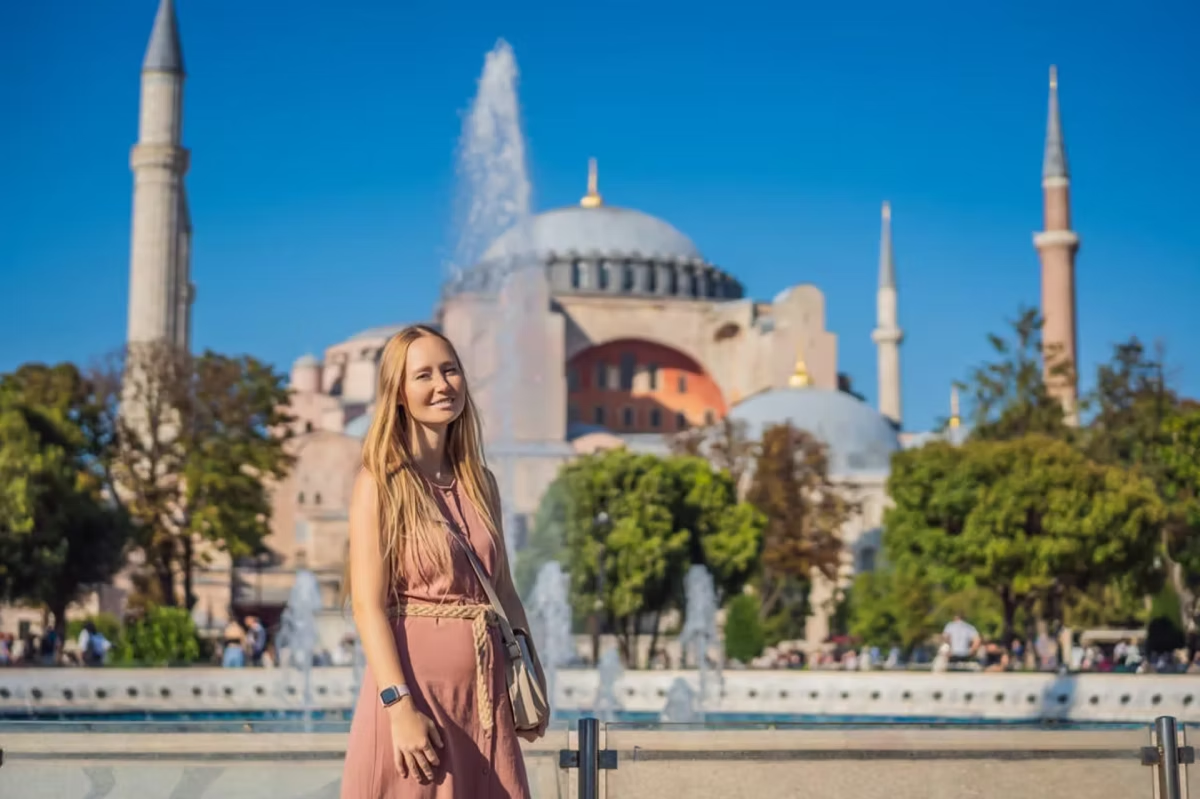
The most important tips for first-time visitors are: book your ticket online in advance, arrive at 9:00am, dress for an active mosque (covered shoulders, knees, and hair for women) before leaving your hotel, download your audio guide app on Wi-Fi the night before, and allow at least 60–90 minutes inside the upper gallery. Do not rush the Deesis Mosaic — it is the reason most people leave moved rather than merely impressed.
First-time visitors to Hagia Sophia often arrive with a vague sense that they are visiting an important building and leave with a profound understanding of why it has defined Istanbul for 1,500 years. The difference between those two experiences is almost entirely a matter of preparation. This guide distils the most useful practical and interpretive advice into a single reference you can read before your visit.
Before You Arrive
1. Book your ticket online — always
The ticket booth queue at Hagia Sophia runs 45–90 minutes during peak season. Online tickets bypass this queue and cost the same as or marginally more than the booth price. There is no reason not to book online. Do it at least 24 hours before your visit to ensure your QR code arrives in time.
Buy This TicketFor a full comparison of all ticket options, see our Hagia Sophia tickets guide.
2. Dress correctly before you leave your hotel
The dress code is strictly enforced. All visitors must cover shoulders and knees; women must cover their hair. Getting this wrong at the entrance wastes time and is easily avoided. The short version: lightweight trousers, a shirt covering your shoulders, and a headscarf in your bag if you are a woman. See our full dress code guide.
3. Download your audio guide app on Wi-Fi the night before
If you have booked a ticket with an audio guide, download the app before you arrive — do not assume data connectivity will be reliable inside the building. Download all content on hotel Wi-Fi the night before and confirm it works before setting off.
4. Read a little about Hagia Sophia in advance
Even 15 minutes with a basic overview — what the Deesis Mosaic is, what happened in 1453, what pendentives are — transforms a visit to an impressive old building into a genuinely moving experience. Our history of Hagia Sophia is a good starting point.
5. Check the Friday prayer closure if visiting on a Friday
The tourist Visiting Area closes between 12:30 and 14:30 every Friday. Arriving during this window with a pre-booked ticket means waiting two hours outside. Plan to arrive before 11:30am or after 14:30. See our opening hours guide.
At the Entrance
6. Go to the History Museum kiosk first
If you have an online ticket, your QR code is collected at the Hagia Sophia History and Experience Museum kiosk — not at the mosque entrance. The museum is at At Meydanı No:10, a short walk from the tourist entrance. Going there first is part of the process — your physical entry pass is issued here.
7. The tourist entrance is not the main gate
Foreign tourists use a dedicated entrance on the northeast side of the building, near Topkapi Palace — not the main gate facing Sultanahmet Square. Follow the signs for “Visiting Area” once you exit the Sultanahmet tram stop.
8. Allow extra time for security
Security screening is mandatory for all visitors — bags through an X-ray, visitors through a metal detector. At 9:00am this takes 5–15 minutes. By 11:00am on a busy day it can take 30–40 minutes. Factor this into your schedule. See our best time to visit guide for queue times by hour.
Inside the Visiting Area
9. Do not rush the Deesis Mosaic
The Deesis Mosaic in the south gallery is widely considered one of the greatest surviving works of Byzantine art. Many first-time visitors give it 2 minutes. Give it 15. Stand close enough to see the individual gold and glass tesserae. Look at the face of Christ — the depth, the psychological presence. Notice what is missing from the lower section and think about why. This is the moment most visitors carry with them long after the visit. See our Deesis Mosaic guide for full context.
10. Look for the Viking runic inscriptions
On the marble balustrade of the upper gallery, small runic carvings left by the Varangian Guard — Norse mercenaries who served the Byzantine emperors — are easy to miss without guidance. The most legible inscription is believed to read “Halfdan carved these runes.” Your audio guide or live guide will point you directly to them; without guidance, look carefully along the balustrade of the south gallery.
11. Spend time at the dome views
The best elevated perspective on the 31-metre central dome is from the upper walkway. Position yourself at the centre of the long gallery section and look down into the prayer hall and up at the dome simultaneously. The Ottoman calligraphic medallions are 7.5 metres in diameter — their scale only becomes apparent from this elevated vantage point.
12. Respect the space
Hagia Sophia is an active place of Muslim worship. Photography is permitted throughout the gallery; flash photography is not. Do not photograph people who are praying. Maintain a respectful volume — the acoustic qualities of the building carry sound further than most visitors expect.
Practical In-Visit Tips
13. Bring water and wear comfortable shoes
Istanbul’s summer heat is substantial. A water bottle is practical. The gallery itself has some uneven surfaces, and if you are combining Hagia Sophia with the Basilica Cistern and Blue Mosque in the same day, comfortable footwear matters significantly.
14. Leave your stroller outside
Strollers and pushchairs are not permitted inside Hagia Sophia — the wheels can damage the historic flooring. If visiting with a very young child, use a baby carrier or fold and leave the stroller with a companion. See our visiting with kids guide.
15. Budget time for Sultanahmet Square afterwards
The open space between Hagia Sophia and the Blue Mosque occupies the site of the ancient Byzantine Hippodrome. The Egyptian Obelisk, the Serpent Column, and the Column of Constantine are still standing there, largely unnoticed by visitors rushing between the two mosques. Five minutes of reading about these monuments before your visit transforms them from background features into one of the most historically charged public spaces in the world. See our attractions near Hagia Sophia guide.
Common First-Timer Mistakes
Arriving without a ticket and queuing at the booth. During peak season, this wastes up to 90 minutes before you even enter. Book online in advance.
Arriving at noon on a Friday. The Visiting Area is closed 12:30–14:30. A very common and very avoidable planning error.
Underestimating how long to spend inside. Budgeting 30 minutes is not enough for a first visit. Budget 75–90 minutes minimum.
Going straight to the main gate. The tourist entrance is on the northeast side of the building. Follow the Visiting Area signs from the Sultanahmet tram stop.
Not dressing appropriately. The dress code is enforced without exception. Arriving in shorts or without a headscarf means either waiting for a cover-up or being turned away.
Missing the Deesis Mosaic. It is in the south gallery, not immediately visible on entry. Follow the audio guide’s suggested route or ask your live guide to take you there first.
Frequently Asked Questions
What should I know before visiting Hagia Sophia for the first time?
Book online, dress for an active mosque, arrive at 9:00am, use the tourist entrance near Topkapi Palace, and allow at least 75 minutes inside. Read a brief overview of the building’s history beforehand — 15 minutes of preparation makes a significant difference to the quality of your experience.
Is Hagia Sophia worth visiting?
Yes — it is genuinely one of the great buildings in the world. The Deesis Mosaic alone justifies the visit. The combination of Byzantine artistry, Ottoman intervention, and 1,500 years of layered history creates an experience that is difficult to replicate anywhere else.
What is the single most important tip for a first visit?
Arrive at opening (9:00am) with a pre-booked ticket. This single decision eliminates most of the practical friction — short security queue, quiet gallery, best light for the mosaics.
Can I visit without a guide?
Yes — but a guide or audio guide significantly enhances the experience for first-time visitors. The gallery has minimal on-site interpretation, and the mosaics are beautiful without context but extraordinary with it.
How much does it cost?
The base entry fee is €25. Online skip-the-line tickets cost approximately €25–€32. See our ticket prices guide for a full breakdown.
