
Dolmabahce Palace, Hagia Sophia & Galata Tower Combo: Full Review
The Dolmabahce Palace, Hagia Sophia and Galata Tower combo is the best option for visitors who want to see Istanbul across multiple eras and neighbourhoods in a single day — moving from the ancient historic peninsula (Hagia Sophia) to the medieval Genoese quarter (Galata Tower) to the 19th-century Ottoman waterfront (Dolmabahce Palace). It is a full-day commitment covering three distinct parts of the city, and suits visitors who have already seen the core Sultanahmet triangle or who want a deliberately cross-city itinerary.
Most Istanbul itineraries are anchored in Sultanahmet. This combo breaks that pattern by pulling together three landmarks from three different parts of the city and three different historical periods — a deliberate and rewarding choice for visitors who want to see Istanbul’s full range rather than its most concentrated historical pocket.
This review covers what each landmark offers, how to structure the logistics of a cross-city day, and whether the combination makes sense for your visit.
Top Tickets
What Does the Combo Include?
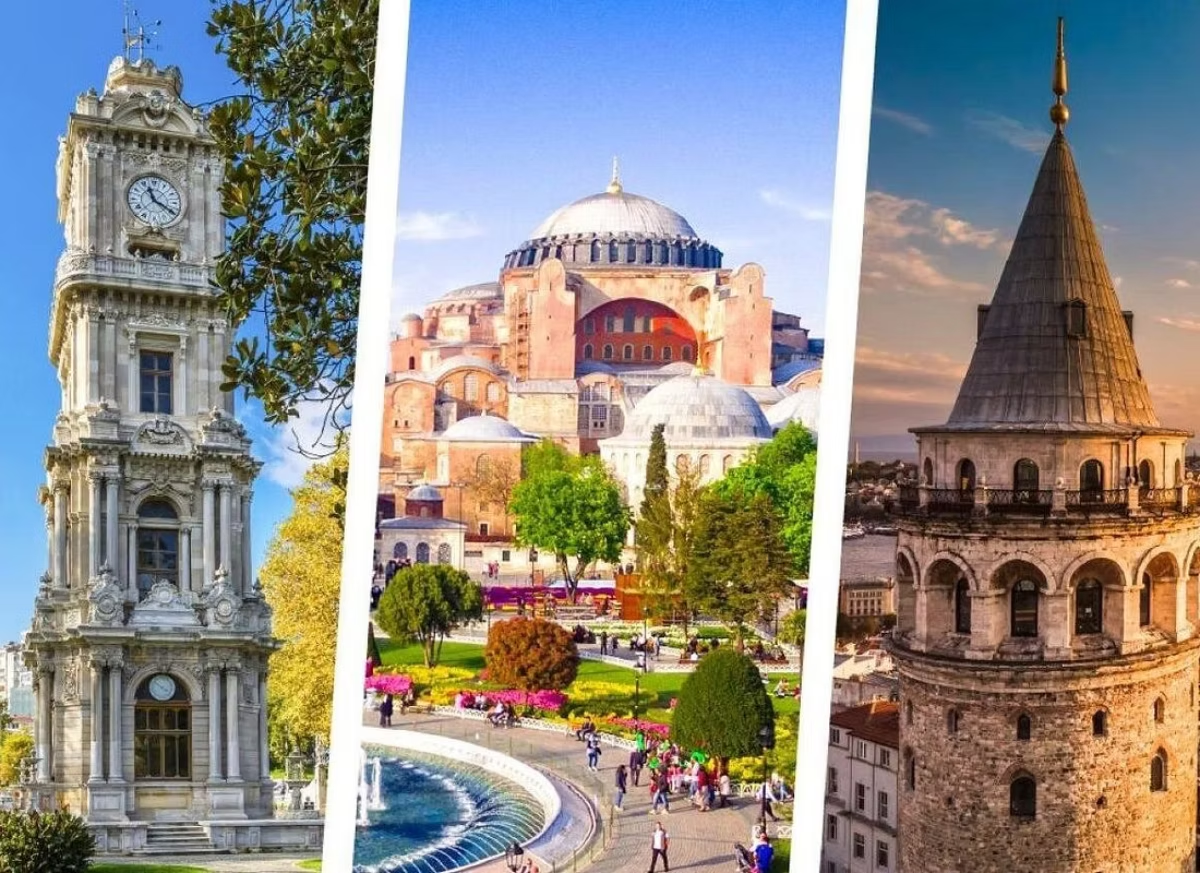
The Dolmabahce Palace, Hagia Sophia and Galata Tower combo includes entry tickets to all three landmarks with skip-the-line access where applicable. Hagia Sophia’s Visiting Area (upper gallery) and Dolmabahce Palace both benefit from advance booking to avoid queues. The combo covers three distinct historical periods — Byzantine/Ottoman (Hagia Sophia, 537 AD), medieval Genoese (Galata Tower, 1348), and late Ottoman Baroque (Dolmabahce Palace, 1856) — across three different neighbourhoods of Istanbul.
Hagia Sophia component:
- Skip-the-line entry to the Visiting Area (upper gallery)
- Audio guide (confirm inclusion at booking)
- QR code collected at the History and Experience Museum kiosk
Galata Tower component:
- Entry to the Galata Tower (Galata Kulesi), the 14th-century Genoese stone tower in the Beyoğlu district
- Access to the observation deck with 360-degree panoramic views over Istanbul
- Audio guide (confirm inclusion at booking)
Dolmabahce Palace component:
- Entry to the Dolmabahce Palace complex on the European shore of the Bosphorus
- Access to the Selamlık (ceremonial halls) and Harem sections
- Note: Dolmabahce typically requires a timed entry ticket — confirm scheduling details at booking
The Three Landmarks: What Each Offers
Hagia Sophia (537 AD — Sultanahmet)
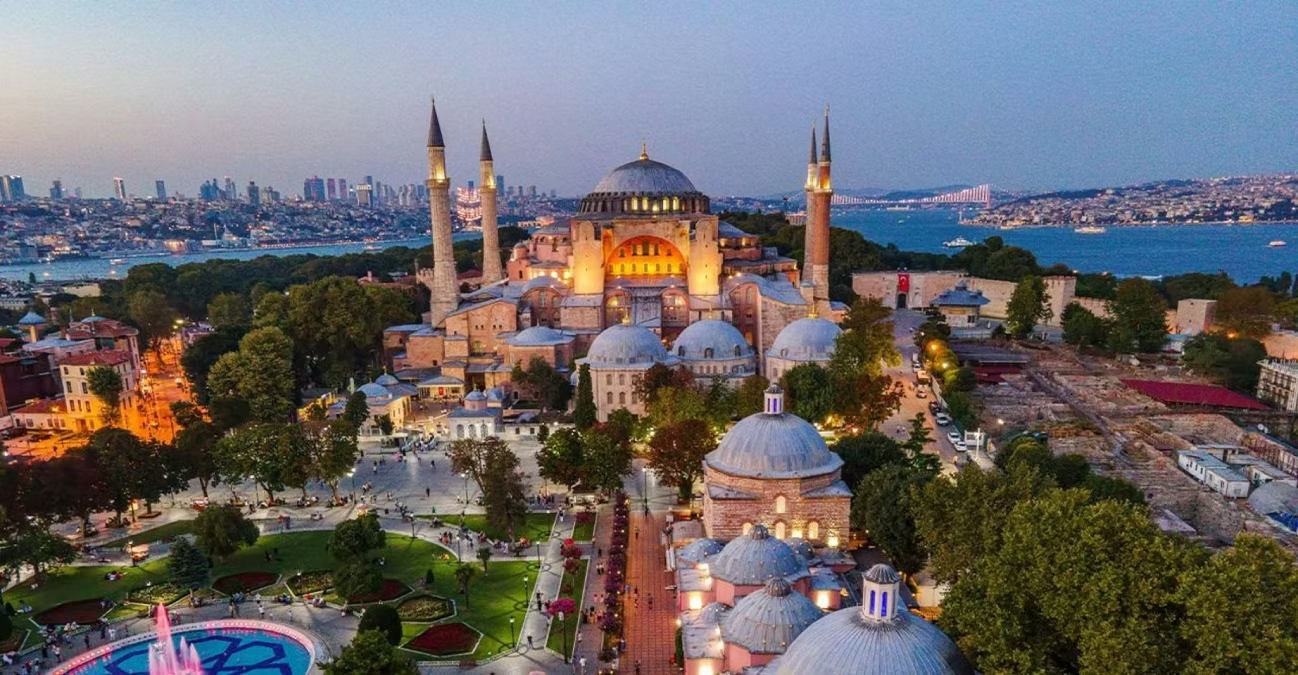
The starting point and the anchor of the day. The upper gallery contains the Deesis Mosaic, the Empress Zoe panel, Viking runic inscriptions, and panoramic views of the 31-metre central dome. Allow 60–90 minutes.
For everything you need to know about the Hagia Sophia visit, see our complete guide to what to see inside Hagia Sophia.
Galata Tower (1348 — Beyoğlu)
The Galata Tower (Galata Kulesi) is a 14th-century Genoese stone tower standing 66.9 metres tall in Istanbul’s Beyoğlu district, on the northern shore of the Golden Horn. Built in 1348 by the Genoese as part of their colony’s fortifications, it offers 360-degree panoramic views from its observation deck — one of the best viewpoints in Istanbul, covering the Golden Horn, the Bosphorus, the historic peninsula, and the Asian shore. It is one of Istanbul’s most visited non-Sultanahmet landmarks.
The Galata Tower stands in what was the Genoese quarter of medieval Constantinople — a reminder that the Byzantine capital was an international city with substantial foreign communities living within it. The Genoese built the tower as the centrepiece of their fortified colony on the north bank of the Golden Horn, and its silhouette has dominated the Istanbul skyline for over 670 years.
What to see:
- The observation deck at the top — 360-degree views encompassing the historic peninsula, the Golden Horn, the Bosphorus, and the Asian shore of Istanbul. On clear days the views extend to the Princes’ Islands in the Sea of Marmara.
- The tower interior, which contains historical exhibits and photographs covering the tower’s history from its Genoese origins through Byzantine, Ottoman, and Turkish Republican periods.
- The surrounding Galata neighbourhood — one of Istanbul’s most characterful districts, with steep cobblestone streets, art galleries, independent shops, and the famous Galata Bridge below.
Allow: 45–60 minutes including the observation deck.
Dolmabahce Palace (1856 — Beşiktaş)
Dolmabahce Palace (Dolmabahçe Sarayı) is a vast 19th-century Ottoman Baroque palace on the European shore of the Bosphorus in Istanbul’s Beşiktaş district. Completed in 1856 under Sultan Abdülmecid I, it served as the main administrative centre of the Ottoman Empire until 1924, replacing Topkapi Palace. It contains 285 rooms, 46 halls, 6 galleries, and 68 toilets, and houses the largest chandelier in the world — a 4.5-tonne Bohemian crystal chandelier in the Great Hall of Ceremonies. Mustafa Kemal Atatürk, the founder of modern Turkey, died here on 10 November 1938; all clocks in the palace are stopped at 9:05am, the moment of his death.
If Topkapi Palace represents Ottoman power at its peak, Dolmabahce represents the empire’s final phase — its attempt to modernise and Westernise in the face of European imperial pressure. The architecture is a deliberately European Baroque statement, commissioned by Sultan Abdülmecid I as a signal that the Ottoman Empire was a modern European power, not an oriental curiosity.
What to see:
- The Selamlık (ceremonial wing) — the state rooms and reception halls used for official functions, including the Great Hall of Ceremonies with its 4.5-tonne chandelier
- The Harem — the private quarters of the sultan and his household, accessible as part of most combo tickets
- Atatürk’s bedroom — where the founder of the Turkish Republic died on 10 November 1938; the clocks throughout the palace are stopped at 9:05am in his memory
- The 600-metre waterfront façade — best appreciated on the approach from the Bosphorus side or from the palace gardens
Allow: 1.5–2 hours for the Selamlık and Harem combined.
Important
Dolmabahce Palace is closed on Mondays and Thursdays. Plan your visit on any other day of the week.
How to Structure the Day
This is a genuinely cross-city day — the three landmarks are spread across different neighbourhoods connected by public transport or taxi. Efficient sequencing matters.
Recommended sequence:
9:00am — Hagia Sophia (Sultanahmet)
Start in Sultanahmet at opening for shortest security queues. Allow 60–90 minutes in the upper gallery.
10:30–11:00am — Travel to Galata Tower (Beyoğlu)
Take the T1 tram from Sultanahmet to Karaköy (approximately 10 minutes), then walk uphill approximately 10 minutes to the Galata Tower. Alternatively, take a taxi (approximately 15 minutes, depending on traffic).
11:00am–12:00pm — Galata Tower
Allow 45–60 minutes for the tower and observation deck. The surrounding Galata neighbourhood is worth a brief wander if time allows.
12:00–12:30pm — Travel to Dolmabahce Palace (Beşiktaş)
From Galata, take a taxi (approximately 15–20 minutes along the Bosphorus shore) or walk down to the Karaköy waterfront and take the public ferry to Beşiktaş (approximately 25 minutes, scenic). The palace entrance is on the Bosphorus waterfront.
12:30–2:30pm — Dolmabahce Palace
Allow 1.5–2 hours for the Selamlık and Harem. Timed entry may apply — confirm your entry slot at booking.
Total day: Approximately 6–7 hours including travel between sites.
Price and Value
| Option | Approx. Price | Sites | Cross-City |
|---|---|---|---|
| Hagia Sophia only | €25–€32 | 1 | No |
| Galata Tower only | €15–€20 | 1 | No |
| Dolmabahce Palace only | €20–€30 | 1 | No |
| All three separately | €60–€82 | 3 | Requires own planning |
| Dolmabahce + HS + Galata combo | €65–€80 | 3 | ✓ Single booking |
The combo saves approximately €10–€15 compared to booking all three separately, and consolidates three separate bookings and QR code collections into one.
For all ticket and tour pricing, see our Hagia Sophia ticket prices guide.
Who Is This Combo Best For?
Visitors who have already covered the core Sultanahmet triangle on a previous day or trip and want to see a different dimension of Istanbul — moving beyond the historic peninsula to the Genoese medieval district and the 19th-century Ottoman waterfront.
Visitors with 2–3 days in Istanbul who have planned Hagia Sophia as one stop among several broader city landmarks rather than as the centrepiece of a Sultanahmet-focused day.
Architecture and design enthusiasts who want to trace Istanbul’s architectural evolution across more than 1,300 years — from the Byzantine dome of Hagia Sophia through the Genoese medieval tower to the Ottoman Baroque grandeur of Dolmabahce.
Visitors interested in late Ottoman history for whom Dolmabahce Palace and its connection to Atatürk is a meaningful part of understanding modern Turkey.
Who Should Consider a Different Option?
First-time visitors to Istanbul on a single day: The Sultanahmet-focused options — the 4-attraction super combo or the half-day morning tour — cover more of Istanbul’s most essential historical content in a more geographically concentrated area.
Visitors with limited mobility: The cross-city logistics involve meaningful distances and varied terrain. The Galata Tower neighbourhood is particularly steep and cobblestoned.
Practical Tips
Check Dolmabahce Palace closure days. The palace is closed every Monday and Thursday — a critical planning detail that many visitors discover too late. Confirm your visit day before booking.
Book a timed entry slot for Dolmabahce. The palace uses timed entry, and popular slots sell out — particularly during peak season. Confirm your entry time when you book the combo.
Use public transport between sites. The T1 tram from Sultanahmet to Karaköy is fast and cheap. The Bosphorus ferry from Karaköy to Beşiktaş is scenic and enjoyable. Both are more reliable than taxis in Istanbul traffic.
Dress code for Hagia Sophia. Covered shoulders, knees, and hair (for women) are required. The Galata Tower and Dolmabahce Palace have no dress code requirements. See our dress code guide.
Allow buffer time between sites. Istanbul traffic can be unpredictable — particularly the Dolmabahce waterfront road along the Bosphorus in the afternoon. Build 15–20 minutes of buffer into your travel time between each landmark.
Frequently Asked Questions
Is Dolmabahce Palace closed on any day of the week?
Yes — Dolmabahce Palace is closed every Monday and Thursday. Plan your visit day accordingly.
Is the Harem included at Dolmabahce?
Most combo products include both the Selamlık and the Harem. Confirm inclusion at the time of booking.
How far is Galata Tower from Hagia Sophia?
Approximately 3–4km, or 15–20 minutes by tram and a short uphill walk. The T1 tram from Sultanahmet to Karaköy takes approximately 10 minutes.
How far is Dolmabahce Palace from Galata Tower?
Approximately 3km along the Bosphorus shore — about 15–20 minutes by taxi or 25 minutes by ferry from Karaköy.
Is the observation deck at the Galata Tower worth visiting?
Yes — it offers one of the best panoramic views in Istanbul, covering the historic peninsula, the Golden Horn, the Bosphorus, and the Asian shore in a single sweep.
What is the cancellation policy?
Most bookings include free cancellation up to 24 hours before the tour date. Check the specific product page before booking.
